




Introduction
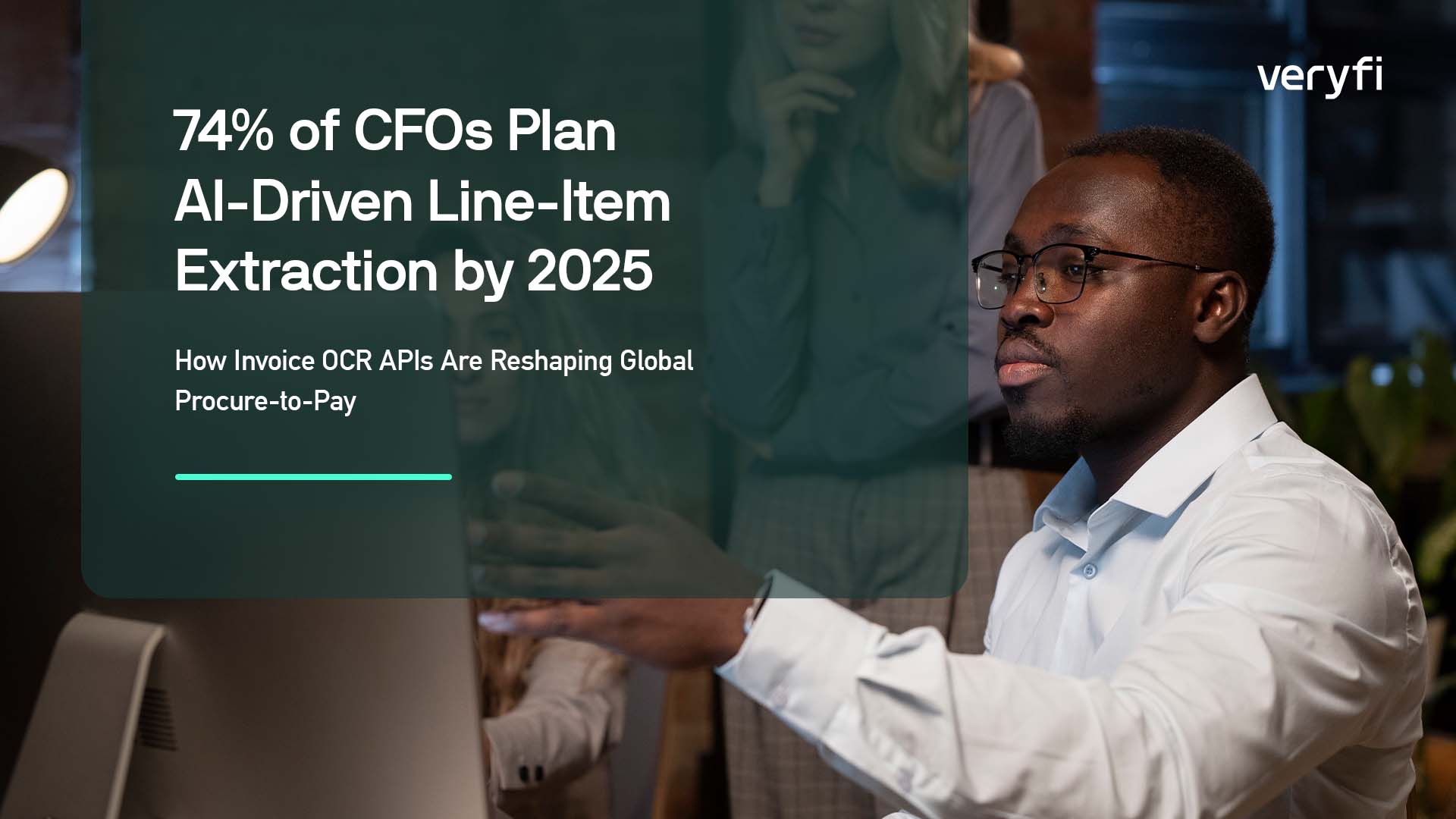
The procure-to-pay landscape is experiencing a seismic shift. According to Deloitte’s 2024 Global CFO Signals survey, 74% of CFOs are prioritizing AI-driven line-item extraction for their accounts payable operations by 2025. This isn’t just another technology trend—it’s a strategic imperative driven by regulatory mandates, operational inefficiencies, and the urgent need for granular financial visibility.
Businesses waste an average of 6,500 hours per year on inefficient payment practices, equating to over $170,000 in losses annually (Supply Chain Connect). The culprits? Manual, paper-based processes consuming 55 hours per week, invoice exceptions and discrepancies eating up 39 hours, and supplier inquiries demanding another 23 hours of precious time.
The solution lies in intelligent document processing platforms that can transform unstructured invoices into structured, actionable data in seconds. Modern OCR APIs are achieving up to 99.56% accuracy for standard documents, with LLM-powered systems improving performance on poor-quality images by 20-30%. This technological leap is enabling organizations to move beyond traditional RPA approaches that max out at 85% field-level precision.
The Market Urgency Behind Granular Line-Item Data Capture
Regulatory Drivers Accelerating Adoption
The push toward AI-driven invoice processing isn’t happening in a vacuum. Regulatory frameworks across the globe are demanding unprecedented levels of transaction transparency and real-time reporting capabilities.
EU E-Invoicing Mandates: The European Union’s progressive rollout of mandatory e-invoicing requirements is forcing multinational corporations to standardize their invoice processing workflows. These regulations don’t just require digital formats—they demand structured, machine-readable data that can be automatically validated and processed.
Cross-Border GST Changes: As tax authorities worldwide implement more sophisticated digital reporting requirements, businesses need systems capable of extracting and categorizing line-item data with surgical precision. The ability to automatically identify tax codes, product categories, and jurisdiction-specific requirements has become table stakes for global operations.
The Multi-Currency, Multi-Language Challenge
Global enterprises face a unique challenge: processing invoices in dozens of currencies and languages while maintaining consistent accuracy and compliance standards. Traditional OCR solutions often struggle with this complexity, leading to manual intervention and processing delays.
Modern AI-native platforms are rising to meet this challenge. Advanced OCR APIs now support 91 currencies and 38 languages, running entirely on in-house infrastructure to ensure data security and processing speed (Why Veryfi). This comprehensive language and currency support eliminates the need for multiple vendor relationships and reduces integration complexity.
The Speed Imperative
In today’s fast-paced business environment, processing speed can make or break supplier relationships and cash flow management. The most advanced OCR platforms are delivering invoice data extraction in under three seconds, with no delays or batching (Veryfi OCR API Platform). This “blazing fast” processing capability enables real-time decision-making and eliminates the bottlenecks that plague traditional AP workflows.
Beyond RPA: The AI-Native Advantage
Why Traditional RPA Falls Short
Robotic Process Automation (RPA) has been the go-to solution for invoice processing automation for years. However, RPA-only approaches are hitting a ceiling. Gartner research indicates that traditional RPA systems max out at 85% field-level precision, leaving significant room for error and manual intervention.
The limitations of RPA become particularly apparent when dealing with:
- Non-standard invoice formats
- Poor image quality
- Complex line-item structures
- Multi-language documents
- Handwritten annotations
The AI-Native Difference
AI-native intelligent document processing platforms take a fundamentally different approach. Instead of relying on rigid rules and templates, these systems use machine learning models that have been pre-trained on millions of invoice formats (Veryfi OCR API). This training enables them to:
- Achieve 99.9% accuracy rates on day one
- Handle variations in format, layout, and quality
- Extract complex line-item data with contextual understanding
- Process documents in multiple languages simultaneously
- Continuously improve through machine learning
Real-World Performance Metrics
The performance gap between traditional and AI-native approaches is substantial. While RPA systems require extensive setup and maintenance, AI-native platforms offer “day-1 accuracy” with deterministic, ready-to-deploy models (Veryfi IDP). This immediate value delivery can accelerate workflows by 200 times by eliminating manual data entry entirely.
The Technology Stack: What Powers Sub-Second Processing
Advanced OCR Architecture
The latest generation of OCR technology leverages Large Language Models (LLMs) to achieve unprecedented accuracy and speed. In Q1 2025, LLM-powered OCR systems are demonstrating up to 99.56% accuracy for standard documents, with significant improvements in challenging scenarios.
Key architectural advantages include:
Deterministic AI Models: Unlike probabilistic systems that require extensive training periods, deterministic models provide consistent, reliable results from the first document processed.
In-House Infrastructure: Leading platforms run entirely on proprietary infrastructure, eliminating third-party dependencies and ensuring consistent performance and security (Why Veryfi).
Multi-Modal Processing: Advanced systems can simultaneously process text, images, and structured data elements, providing comprehensive document understanding.
Security and Compliance Framework
With financial documents containing sensitive information, security isn’t optional—it’s fundamental. Enterprise-grade OCR platforms maintain SOC 2 Type II certifications and FedRAMP security standards, ensuring that document processing meets the highest security requirements (Why Veryfi).
Additional security features include:
- End-to-end encryption
- Audit trails for compliance reporting
- Role-based access controls
- Data residency options for international compliance
Integration Capabilities
Modern OCR APIs are designed for seamless integration with existing ERP and financial systems. ERP software automates tasks, provides real-time data visibility, and enhances customer satisfaction, reducing costs and increasing efficiency (Veryfi ERP). The ability to integrate OCR capabilities directly into these systems eliminates data silos and ensures consistent processing workflows.
Industry Applications and Use Cases
Manufacturing and Supply Chain
Manufacturing companies have particularly benefited from ERP software adoption, and the integration of AI-driven invoice processing amplifies these benefits (Veryfi ERP). Complex supply chains with multiple vendors, currencies, and compliance requirements demand sophisticated document processing capabilities.
Case Study Insight: Companies implementing intelligent document processing report dramatic improvements in financial visibility and expense control, often achieving full implementation within one month.
Healthcare and Insurance
Healthcare organizations deal with complex billing structures, insurance claims, and regulatory requirements that make manual processing particularly challenging. AI-driven line-item extraction enables these organizations to:
- Process insurance claims with greater accuracy
- Ensure compliance with healthcare regulations
- Reduce processing times for critical payments
- Maintain detailed audit trails for regulatory reporting
Financial Services and Fintech
Financial institutions require the highest levels of accuracy and security when processing vendor invoices and operational expenses. The combination of 99.9% accuracy rates and enterprise-grade security makes AI-native OCR platforms ideal for these demanding environments.
Construction and Real Estate
Construction projects involve complex vendor relationships, progress billing, and material cost tracking. AI-driven invoice processing enables project managers to:
- Track costs against budgets in real-time
- Manage complex subcontractor billing
- Ensure compliance with project-specific requirements
- Maintain detailed cost records for client billing
The Competitive Landscape: Evaluating OCR API Solutions
Key Evaluation Criteria
When evaluating OCR APIs for invoice automation, organizations should consider several critical factors (Veryfi OCR API):
Data Extraction Capabilities: The ability to extract not just header information but detailed line-item data with contextual understanding.
Processing Speed: Sub-second response times that enable real-time processing and decision-making.
Fraud Detection: Built-in capabilities to detect duplicate invoices and fraudulent documents.
Integration Ease: APIs that can be quickly integrated into existing systems without extensive development work.
Scalability: The ability to handle volume spikes without performance degradation.
Market Leaders and Differentiators
The OCR API market includes several major players, each with distinct strengths and limitations. When comparing solutions like Veryfi, AWS Textract, and Nanonets, key differentiators emerge around accuracy, speed, and specialized features (Veryfi OCR API).
Accuracy Benchmarks: Leading platforms achieve 99.9% accuracy rates, significantly outperforming traditional solutions.
Processing Speed: The fastest solutions deliver structured JSON responses in under one second, enabling real-time processing workflows.
Specialized Features: Advanced platforms include features like AI-powered fraud detection, business rules engines, and mobile capture SDKs.
Implementation Roadmap: Future-Proofing Your ERP Stack
Phase 1: Assessment and Planning (Weeks 1-2)
Current State Analysis:
- Document current AP processing volumes and complexity
- Identify pain points in existing workflows
- Assess integration requirements with current ERP systems
- Evaluate security and compliance requirements
Vendor Evaluation:
- Test accuracy rates with sample invoice sets
- Measure processing speed under realistic conditions
- Evaluate integration complexity and developer resources required
- Assess total cost of ownership including implementation and ongoing costs
Phase 2: Pilot Implementation (Weeks 3-6)
Limited Scope Deployment:
- Select a subset of vendors or document types for initial testing
- Implement basic API integration with existing systems
- Establish monitoring and quality assurance processes
- Train staff on new workflows and exception handling
Performance Monitoring:
- Track accuracy rates and processing speeds
- Monitor integration stability and error rates
- Gather user feedback and identify optimization opportunities
- Document lessons learned and best practices
Phase 3: Full-Scale Rollout (Weeks 7-12)
Enterprise Deployment:
- Expand processing to all invoice types and vendors
- Implement advanced features like fraud detection and business rules
- Establish comprehensive monitoring and reporting dashboards
- Create standard operating procedures for ongoing management
Optimization and Enhancement:
- Fine-tune business rules and validation criteria
- Implement advanced analytics and reporting capabilities
- Explore additional use cases like expense management and check processing
- Plan for future enhancements and feature additions
Advanced Features and Capabilities
AI-Powered Fraud Detection
Modern OCR platforms include sophisticated fraud detection capabilities that go beyond simple duplicate checking. AI-powered systems can identify suspicious patterns, validate vendor information, and flag potentially fraudulent documents for manual review.
Business Rules Engine
Advanced platforms include configurable business rules engines that allow organizations to implement custom validation logic, approval workflows, and exception handling processes. These engines can automatically route invoices based on amount thresholds, vendor categories, or other business criteria.
Mobile and Multi-Channel Capture
With the rise of remote work and mobile-first operations, the ability to capture and process documents from multiple channels has become essential. Leading platforms offer mobile SDKs, browser-based capture tools, and even WhatsApp chatbot integration for maximum flexibility.
Analytics and Intelligence
Beyond basic document processing, advanced platforms provide analytics and intelligence capabilities that help organizations optimize their AP operations. These might include spend analysis, vendor performance metrics, and predictive analytics for cash flow management.
The ROI Equation: Quantifying the Benefits
Direct Cost Savings
The financial impact of implementing AI-driven invoice processing can be substantial. With businesses currently wasting 6,500 hours annually on inefficient payment practices, the potential for cost reduction is significant (Supply Chain Connect).
Labor Cost Reduction: Eliminating manual data entry and reducing exception handling can free up significant staff time for higher-value activities.
Error Reduction: Higher accuracy rates reduce the cost of errors, rework, and supplier disputes.
Processing Speed: Faster processing enables early payment discounts and improves supplier relationships.
Indirect Benefits
Improved Cash Flow Management: Real-time visibility into payables enables better cash flow forecasting and management.
Enhanced Compliance: Automated compliance checking reduces the risk of regulatory penalties and audit findings.
Supplier Relationships: Faster, more accurate processing improves supplier satisfaction and can lead to better terms and pricing.
Scalability: Automated systems can handle volume growth without proportional increases in staff or processing costs.
Future-Proofing Checklist
Technical Requirements
- API-First Architecture: Ensure the solution offers robust APIs for integration with current and future systems
- Multi-Format Support: Verify support for all current document formats and the ability to add new formats as needed
- Scalability: Confirm the platform can handle projected volume growth over the next 3-5 years
- Security Standards: Validate compliance with current and anticipated security requirements
- Multi-Language Support: Ensure coverage for all current and planned geographic markets
Operational Considerations
- Change Management: Develop comprehensive training and change management plans
- Exception Handling: Establish clear processes for handling exceptions and edge cases
- Quality Assurance: Implement ongoing monitoring and quality assurance processes
- Vendor Management: Establish clear SLAs and performance metrics with technology vendors
- Continuous Improvement: Plan for ongoing optimization and feature enhancement
Strategic Alignment
- Business Objectives: Ensure the solution aligns with broader digital transformation goals
- Regulatory Compliance: Verify the solution can adapt to changing regulatory requirements
- Integration Roadmap: Plan for integration with other business systems and processes
- ROI Measurement: Establish clear metrics for measuring success and ROI
- Future Capabilities: Ensure the platform can support anticipated future requirements
Conclusion: The Path Forward
The convergence of regulatory pressure, operational inefficiency, and technological advancement is creating an unprecedented opportunity for organizations to transform their procure-to-pay operations. With 74% of CFOs prioritizing AI-driven line-item extraction by 2025, the question isn’t whether to implement these technologies, but how quickly and effectively organizations can deploy them.
The most successful implementations will be those that move beyond traditional RPA approaches to embrace AI-native platforms capable of delivering 99.9% accuracy at sub-second speeds. These platforms must support the global nature of modern business with comprehensive multi-currency and multi-language capabilities while maintaining the highest security and compliance standards.
AI is increasingly being adopted in business operations, with over 70% of businesses having adopted the technology for various applications. The organizations that act now to implement comprehensive, future-proof solutions will gain significant competitive advantages in operational efficiency, cost management, and strategic agility.
The roadmap is clear: assess current capabilities, evaluate leading-edge solutions, implement with a focus on scalability and integration, and continuously optimize for maximum value. The future of procure-to-pay is AI-driven, and that future is arriving faster than many organizations realize. The time to act is now.
FAQ
Why are 74% of CFOs prioritizing AI-driven line-item extraction by 2025?
According to Deloitte’s 2024 Global CFO Signals survey, CFOs are driven by regulatory mandates, operational inefficiencies, and the urgent need to reduce manual processing costs. Businesses currently waste an average of 6,500 hours annually on inefficient payment practices, equating to over $170,000 in losses per year.
How accurate are modern OCR APIs for invoice processing compared to traditional methods?
Modern OCR APIs powered by Large Language Models achieve up to 99.56% accuracy for standard documents, representing a 20-30% improvement over traditional OCR systems. Advanced platforms like Veryfi offer “Day 1 Accuracy” with deterministic AI models that provide consistent results from implementation.
What are the key advantages of OCR APIs over traditional RPA solutions for accounts payable?
OCR APIs offer superior speed with sub-second processing times, better accuracy rates, and native support for multiple currencies and languages. Unlike RPA solutions that require extensive setup and maintenance, modern OCR APIs can be integrated in days rather than months and provide real-time data extraction capabilities.
How do OCR APIs handle international invoices and multi-currency processing?
Advanced OCR APIs support processing invoices in 91 currencies and 38 languages, with multilingual capabilities powered by LLM technology. Tools like PaddleOCR now support over 80 languages, making them ideal for global procure-to-pay operations that need to handle diverse document formats and international compliance requirements.
What should businesses consider when evaluating OCR APIs for invoice automation?
Key considerations include data extraction capabilities, processing speed, ability to detect duplicates or fraudulent documents, ease of integration, and scalability. The best OCR APIs for invoice processing should offer touchless processing, automated validation, faster approvals, and the ability to transform unstructured documents into valuable business insights.
How quickly can businesses implement OCR API solutions for accounts payable automation?
Modern OCR API platforms can be launched in days rather than months, significantly accelerating implementation timelines. Platforms like Veryfi can accelerate workflows by 200 times by eliminating manual data entry, allowing businesses to achieve immediate ROI from their AP automation investments.