




Customer loyalty programs have evolved far beyond simple punch cards and basic point systems. Today’s businesses have access to sophisticated strategies that can transform one-time buyers into lifelong brand advocates. Whether you’re a startup looking to establish your first loyalty initiative or an established company seeking to revamp your customer retention strategy, understanding the various program types is crucial for success.
Bottom Line Up Front: The most effective loyalty programs align with your brand values, customer preferences, and business model. Simple programs like cashback and points work well for transactional relationships, while experiential and community-based programs excel at building emotional connections.
Understanding Modern Loyalty Programs
Loyalty programs are structured marketing strategies designed to encourage customers to continue using a company’s products or services. The best programs create a win-win scenario: customers receive tangible value for their loyalty, while businesses benefit from increased retention, higher lifetime value, and valuable customer data.
Complete Loyalty Program Types Breakdown
| Program Type | Best For | Key Benefits | Implementation Complexity |
|---|---|---|---|
| Cashback | Retail, Credit Cards | Immediate value, broad appeal | Low |
| Points-based | E-commerce, Retail | Flexible rewards, gamification | Medium |
| Tiered | Luxury, Airlines, Hotels | Status motivation, increased spending | Medium-High |
| Paid Loyalty | Frequent purchasers | Premium benefits, predictable revenue | Medium |
| Punch Card | Local businesses, Coffee shops | Simple, cost-effective | Very Low |
| Coalition | Multiple brands | Shared costs, faster point earning | High |
| Referral Programs | Service businesses | Organic growth, trusted recommendations | Low-Medium |
| Gamification | Tech, Entertainment | High engagement, viral potential | High |
| Experiential | Lifestyle, Premium brands | Emotional connection, brand differentiation | High |
| Community-based | Brands with passionate users | Deep loyalty, user-generated content | Medium-High |
| Value-based | Purpose-driven brands | Emotional alignment, brand advocacy | Medium |
| Surprise and Delight | Hospitality, Service | Memorable experiences, word-of-mouth | Medium |
| Mobile App-based | Tech-savvy demographics | Convenience, rich data collection | Medium-High |
| Subscription-based | Content, SaaS | Recurring revenue, predictable income | Medium |
| Hybrid | Complex businesses | Multiple engagement touchpoints | High |
Detailed Program Analysis
Transaction-Based Programs
Cashback Programs offer the most straightforward value proposition. Customers receive a percentage of their purchase back as cash or credit. American Express and many credit cards have perfected this model because it’s universally understood and appreciated. The simplicity makes it easy to communicate and measure ROI.
Points-based Programs provide more flexibility than cashback, allowing customers to accumulate points for various rewards. Starbucks’ mobile app exemplifies this approach, where every dollar spent earns stars that can be redeemed for free drinks or food. This system encourages repeat visits and allows for seasonal bonus point promotions.
Punch Card Programs represent the traditional loyalty approach where customers receive a stamp or punch for each purchase, earning a free item after a set number of visits. While simple, digital versions can track customer behavior and send targeted promotions.
Status-Driven Programs
Tiered Programs tap into customers’ desire for status and recognition. Airlines pioneered this model with frequent flyer programs offering Bronze, Silver, and Gold status levels. Each tier provides increasingly valuable benefits like priority boarding, lounge access, and upgrade privileges. The key is creating meaningful differences between tiers that justify increased spending.
Paid Loyalty Programs like Amazon Prime flip the traditional model by requiring an upfront fee in exchange for premium benefits. This approach works when the benefits clearly exceed the membership cost and encourage more frequent usage. The upfront payment also creates a psychological commitment to maximize value.
Engagement-Focused Programs
Gamification Programs transform shopping into a game-like experience with badges, leaderboards, challenges, and achievement levels. Nike+ turned running into a competitive social experience, while Foursquare (now Swarm) gamified location check-ins with mayor badges and venue tips.
Experiential Programs prioritize exclusive experiences over material rewards. Luxury brands often host private shopping events, behind-the-scenes tours, or meet-and-greets with designers. These create lasting memories that strengthen emotional brand connections in ways that discounts cannot.
Community-based Programs build loyalty through belonging rather than transactions. Harley-Davidson’s H.O.G. (Harley Owners Group) creates a lifestyle community where customers participate in rides, rallies, and exclusive events. The motorcycle becomes secondary to the community identity.
Partnership and Growth Programs
Coalition Programs unite multiple brands to offer customers more earning and redemption opportunities. Air Miles and Nectar are examples where customers can earn points shopping at various retailers and redeem them across the network. This approach reduces individual brand costs while accelerating point accumulation.
Referral Programs leverage satisfied customers to acquire new ones. Dropbox famously grew from 100,000 to 4 million users in 15 months partly through referral bonuses that gave both referrer and referee additional storage space. The key is ensuring the reward motivates sharing while the product delivers on expectations.
Purpose and Values-Based Programs
Value-based Programs align rewards with social or environmental causes that resonate with the brand’s target audience. TOMS’ “One for One” program donates shoes for every pair purchased, while Patagonia’s loyalty program includes environmental activism opportunities alongside traditional rewards.
Surprise and Delight Programs create unexpected positive experiences without preset earning structures. Hotels might upgrade loyal guests unexpectedly, or retailers might include surprise gifts with orders. The unpredictability creates emotional highs that strengthen loyalty, though measuring ROI can be challenging.
Technology-Enhanced Programs
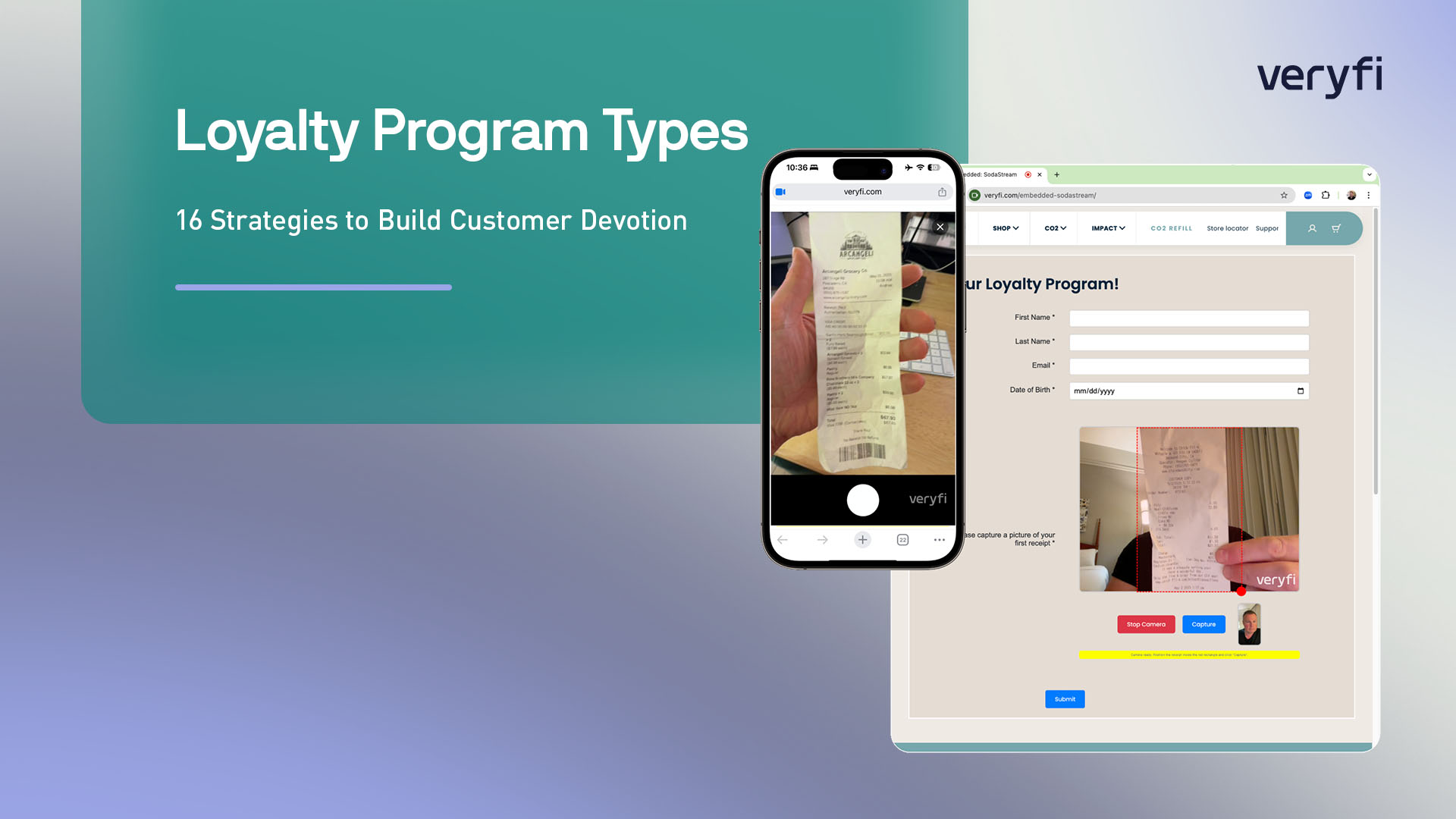
Mobile App-based Programs leverage smartphone capabilities for location-based offers, push notifications, and seamless experiences. Modern implementations often include receipt capture functionality that automatically extracts purchase data, eliminating manual entry while providing rich insights for personalization. Target’s app and Veryfi-powered loyalty solutions demonstrate how combining receipt scanning with preference forms creates comprehensive customer profiles that enable highly targeted rewards and offers.
Subscription-based Programs combine loyalty benefits with recurring revenue models. Spotify Premium, Netflix, and countless “subscription box” services create loyalty through convenience and exclusive content rather than point accumulation.
Comprehensive Approaches
Hybrid Programs combine multiple program types to serve diverse customer segments and engagement preferences. Sephora’s Beauty Insider program includes points, tiers, exclusive experiences, early access, and birthday gifts. This comprehensive approach addresses different motivation types within their customer base.
Choosing the Right Program Type
The most successful loyalty programs align with these key factors:
Customer Behavior Patterns: Frequent, low-value purchases suit points or punch card systems, while infrequent, high-value purchases work better with tiered or experiential programs.
Brand Identity: Luxury brands benefit from exclusive experiences and tier-based status, while value brands should focus on cashback or practical rewards.
Business Objectives: Companies seeking data collection might choose app-based programs, while those prioritizing customer acquisition could emphasize referral programs.
Implementation Resources: Complex programs require significant technology investment and ongoing management, while simple programs can launch quickly with minimal infrastructure.
The Power of Data Integration in Modern Loyalty Programs
Today’s most successful loyalty programs leverage the combination of first-party data (behavioral data collected directly from customer interactions) and zero-party data (information customers intentionally share) to create highly personalized experiences.
First-Party Data: The Foundation of Smart Loyalty
First-party data comes from actual customer behavior and transactions. When customers submit receipts through mobile apps or web forms, advanced receipt processing technology can extract detailed line-item information including:
- Product categories and brands purchased
- Purchase frequency and timing patterns
- Spending amounts and basket composition
- Location and merchant preferences
- Seasonal buying behaviors
This granular purchase data enables businesses to understand not just how much customers spend, but what they buy, when they buy it, and how their preferences evolve over time.
Zero-Party Data: Customer Intent and Preferences
Zero-party data represents information customers willingly provide through forms, surveys, and profile updates. This includes:
- Personal preferences and interests
- Demographic information
- Lifestyle choices and values
- Communication preferences
- Future purchase intentions
The Synergy Effect
When combined, these data types create a comprehensive customer profile that enables:
Hyper-Personalized Rewards: Instead of generic point multipliers, programs can offer targeted bonuses on products customers actually buy. For example, if receipt data shows a customer regularly purchases organic produce, the program can automatically offer double points on organic items.
Predictive Engagement: By analyzing purchase patterns alongside stated preferences, programs can anticipate when customers are likely to make specific purchases and deliver timely, relevant offers.
Fraud Prevention: Cross-referencing receipt data with customer profiles helps identify suspicious activity, such as duplicate submissions or manipulated receipts, protecting program integrity.
Dynamic Segmentation: Real-time purchase data combined with preference information allows for sophisticated customer segmentation that adapts as behaviors change.
Building Modern Loyalty Programs with Veryfi Embedded
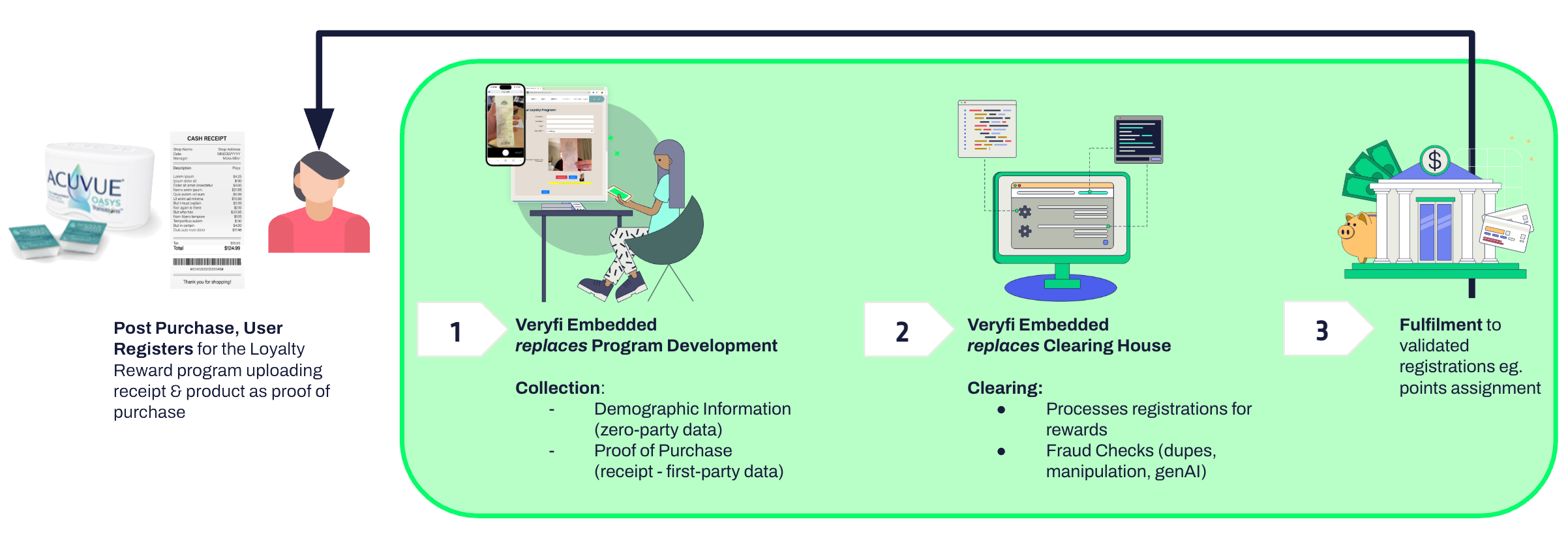
Creating sophisticated loyalty programs that leverage both receipt data and customer preferences has traditionally required significant development resources and complex integrations. Veryfi Embedded changes this by providing a comprehensive loyalty program builder that combines campaign management, receipt processing, and fraud detection in a single platform.
The Complete Loyalty Program Solution
Veryfi Embedded offers businesses everything needed to launch data-rich loyalty programs:
Campaign Manager: An intuitive campaign designer that supports all 16 loyalty program types discussed above. Businesses can easily configure point multipliers, tier requirements, referral bonuses, and experiential rewards through a user-friendly interface.
Form Builder: Captures zero-party data through customizable forms that collect customer preferences, demographics, and interests. This information integrates seamlessly with purchase data to create comprehensive customer profiles.
Receipt Camera Integration: Built-in lens software automatically captures and processes receipts, extracting line-item details without requiring customers to manually enter purchase information. This first-party data becomes the foundation for personalized rewards and fraud detection.
Advanced Fraud Detection: AI-powered systems automatically check for duplicate receipts, receipt manipulation, and generated receipts, protecting program integrity while maintaining a smooth customer experience.
Program Controls: Sophisticated campaign management including start and end dates, user limits, and automatic campaign shut-off limits to maintain budget control and program economics.
This integrated approach eliminates the need for businesses to build separate systems for form collection, receipt processing, and campaign management, while ensuring all data flows seamlessly together for optimal personalization.
Real-World Implementation
The power of combining receipt data extraction with preference collection becomes clear when customers can simply scan their receipts and immediately receive personalized offers based on their actual purchase behavior. Instead of generic promotions, customers see rewards tailored to the specific brands and categories they buy, creating a more engaging and valuable loyalty experience.
Implementation Success Factors
Regardless of program type, several factors determine success. The value proposition must be immediately clear and compelling. Earning and redemption should be simple and achievable. Regular communication keeps the program top-of-mind without becoming annoying. Most importantly, the program should enhance rather than complicate the customer experience.
Data-Driven Personalization: Modern programs must leverage customer data to deliver relevant, timely experiences that feel personalized rather than generic.
Seamless Technology Integration: The best programs integrate smoothly with existing customer touchpoints, whether through mobile apps, websites, or in-store experiences.
Fraud Protection: As programs become more sophisticated, robust fraud detection becomes essential to maintain program economics and customer trust.
The loyalty program landscape continues evolving as technology enables new possibilities and customer expectations rise. The most successful programs will be those that genuinely add value to customers’ lives while supporting business objectives through deeper, more profitable relationships.
Whether you choose a simple cashback program or a complex hybrid approach, the key is starting with your customers’ needs and building a program that makes their lives better while achieving your business goals.