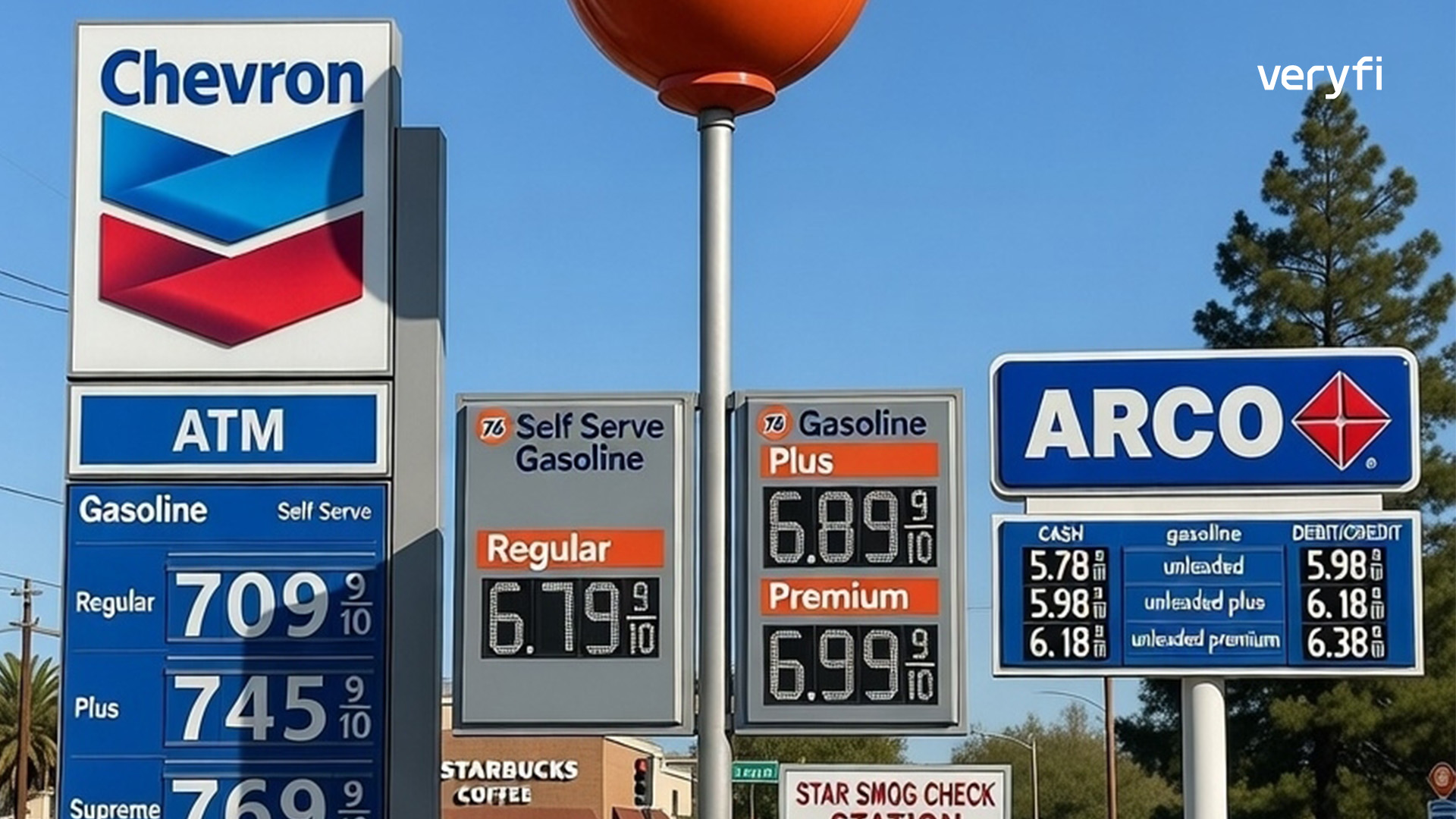
Holy cow, California fuel prices are out of control.
While I was in Australia over Christmas, I had more fuel related discussions than normal. Weird dinner conversation? Maybe. But it’s becoming a universal topic — search on X and you’ll see it everywhere. People are waking up to just how much fuel costs affect everything they buy. Most logistics and transport runs on fossil fuels, which means every product you pick up at a store already has the cost of moving it baked into the price. The more expensive fuel gets, the more everything costs. Simple economics.
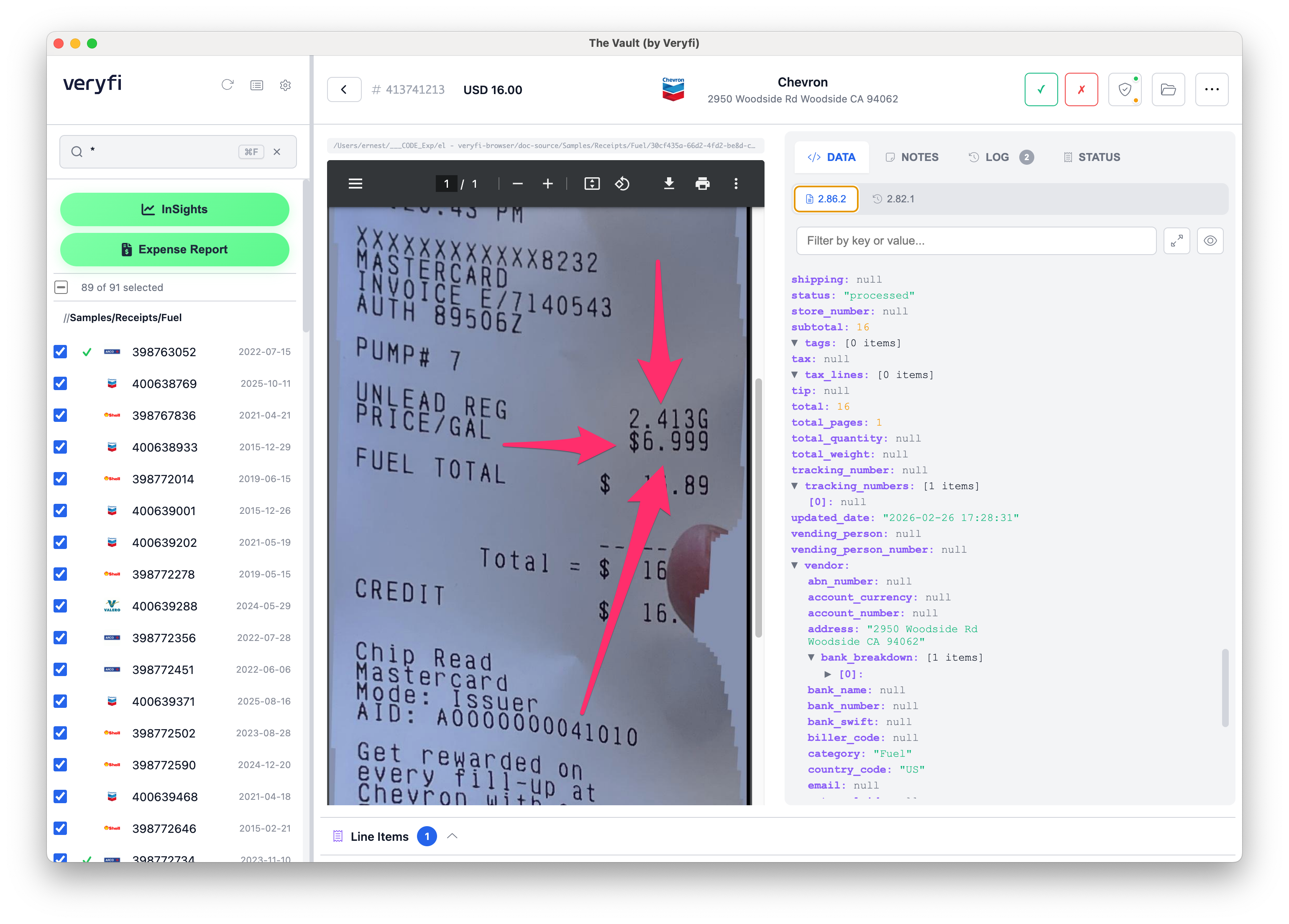
To put it in perspective — as of late February 2026, average petrol prices in Australia are around 1.57 AUD per liter, which works out to roughly $5.95 per gallon. With the Australian dollar at $1.41 USD, that’s effectively $4.21 USD per gallon. If you live anywhere outside California, you’re probably thinking that sounds expensive. But if you live in California… well let’s dig in because fuel prices here are out of control.
My Fuel Receipts
I’m a self-confessed receipt hoarder and will take the occassional photo of a fuel station where prices are eye watering (yes the hero image is a merger of 3 photos I took). For over 10 years I’ve been storing my fuel receipts in Veryfi’s cloud storage — every fill-up, every vendor, every price. I’ve always felt something was off with California fuel prices, so I recently ran my entire receipt history through The Vault which uses Receipts OCR API to visualize my receipts.
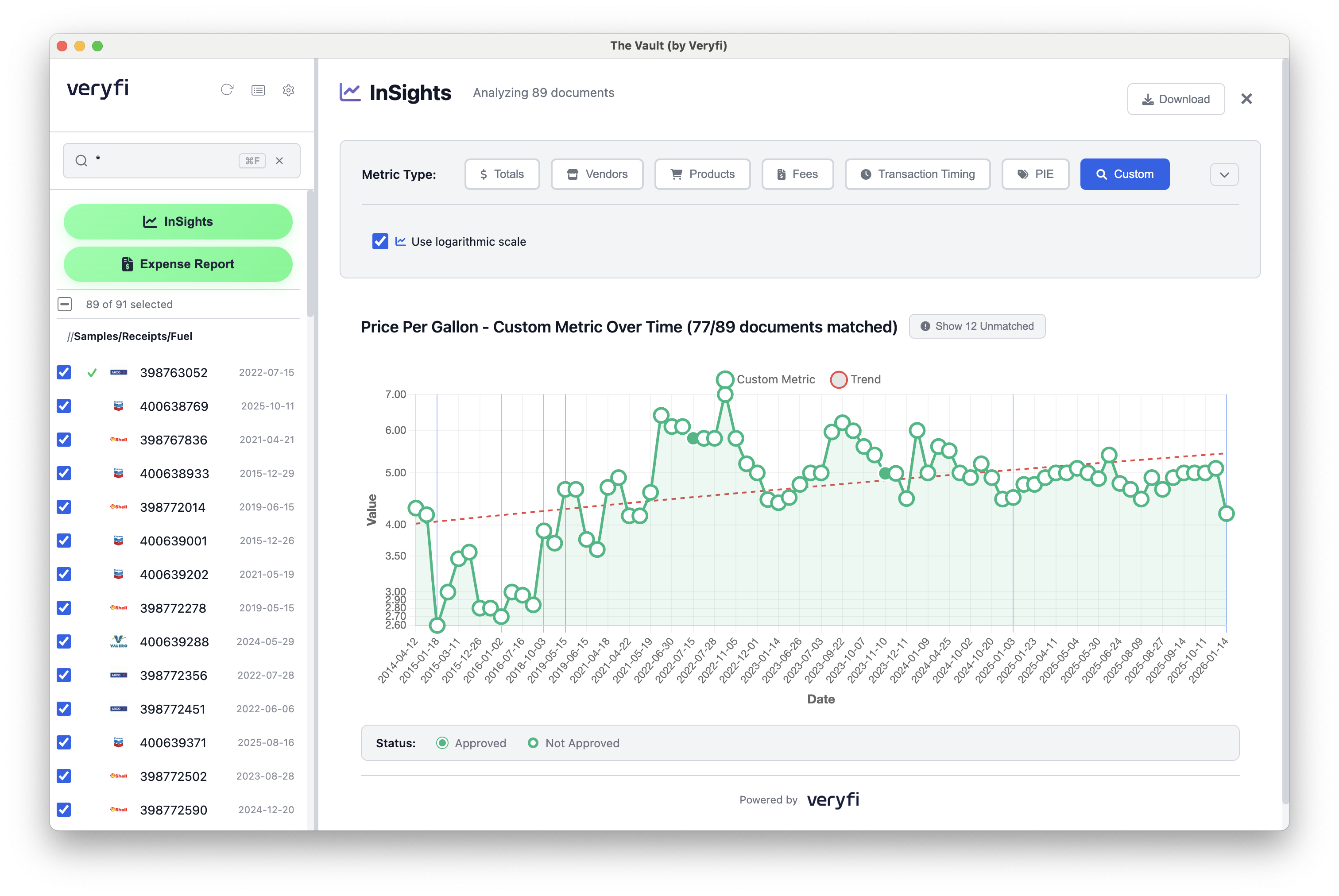
The numbers don’t lie. In California we went from roughly $2.60 per gallon in 2014 to $5+ today. What’s striking isn’t just the price — it’s how gradually it crept up on us. We’ve been slowly boiled like the proverbial frog. We’re now paying double what we paid a decade ago and most of us barely noticed it happening.
Worth noting: the state has spent decades layering on fuel taxes, cap-and-trade costs, and boutique fuel blending requirements — and yet California still holds 6 of the top 10 most polluted cities in the US for year-round particle pollution, according to the American Lung Association’s 2024 and 2025 State of the Air reports. But that’s a rabbit hole for another day.
What Fuel Receipts Actually Tell You
Here’s where it gets interesting. Receipts are more than proof of purchase — they’re structured data waiting to be unlocked. Once you pour years of receipts into a tool like The Vault, you stop seeing receipts. You start seeing patterns… categories… money.
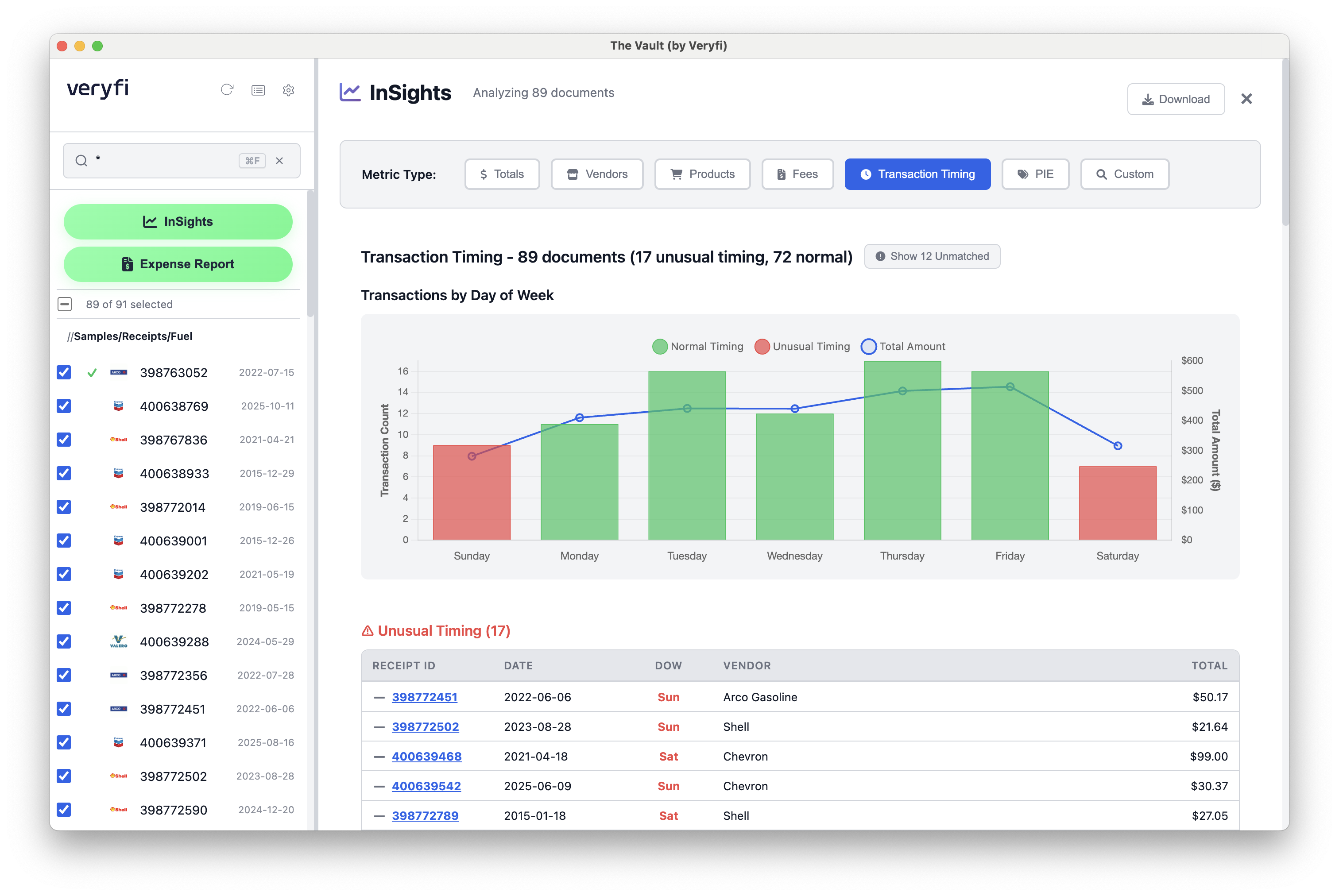
Anomaly Investigation — Why do Sunday and Saturday transactions flag as unusual timing? Are these personal trips mixed in with business? Who authorized weekend fuel purchases, and were they the same driver and vehicle each time?
Vendor Patterns — Which vendors show up most on weekdays vs. weekends? Is there a price difference by vendor depending on the day? Are certain stations like Arco, Shell, or Chevron only appearing on weekends, suggesting detours from a normal route?
Spend Analysis — Why does total spend dip on Saturdays despite a reasonable transaction count? Is cost-per-fill-up higher on unusual timing days? Which vendor is costing the most per visit on average?
Compliance & Audit — Do weekend transactions line up with approved travel or overtime? Are the same receipt IDs popping up repeatedly in anomaly flags? Are unusual timing purchases trending upward year over year?
Operational — Could fueling be consolidated to fewer days to reduce admin overhead? Are Thursday and Friday fill-ups a pattern of pre-weekend preparation?
Who Benefits From This Kind of Analysis?
This isn’t just useful for obsessive receipt hoarders like me. Transaction timing analysis has real value across a wide range of businesses.
Fleet & Logistics companies can monitor driver fueling behavior, verify routes are being followed, and make sure fuel cards aren’t being misused. Expense management teams can flag policy violations automatically — weekend fuel on a company card is a classic audit trigger. Corporate travel departments can enforce T&E policies at scale. Insurers covering commercial fleets can use fueling patterns as a proxy for driver behavior and risk. Forensic accountants and auditors can surface suspicious patterns across thousands of receipts in seconds. And even a sole trader or small contractor with a company vehicle can use it to cleanly separate business and personal fuel use at tax time.
The sweet spot is any business where fuel is a controlled expense tied to a vehicle, a route, or an employee — because that’s where timing anomalies carry the most financial consequence.
There’s Always More to Explore
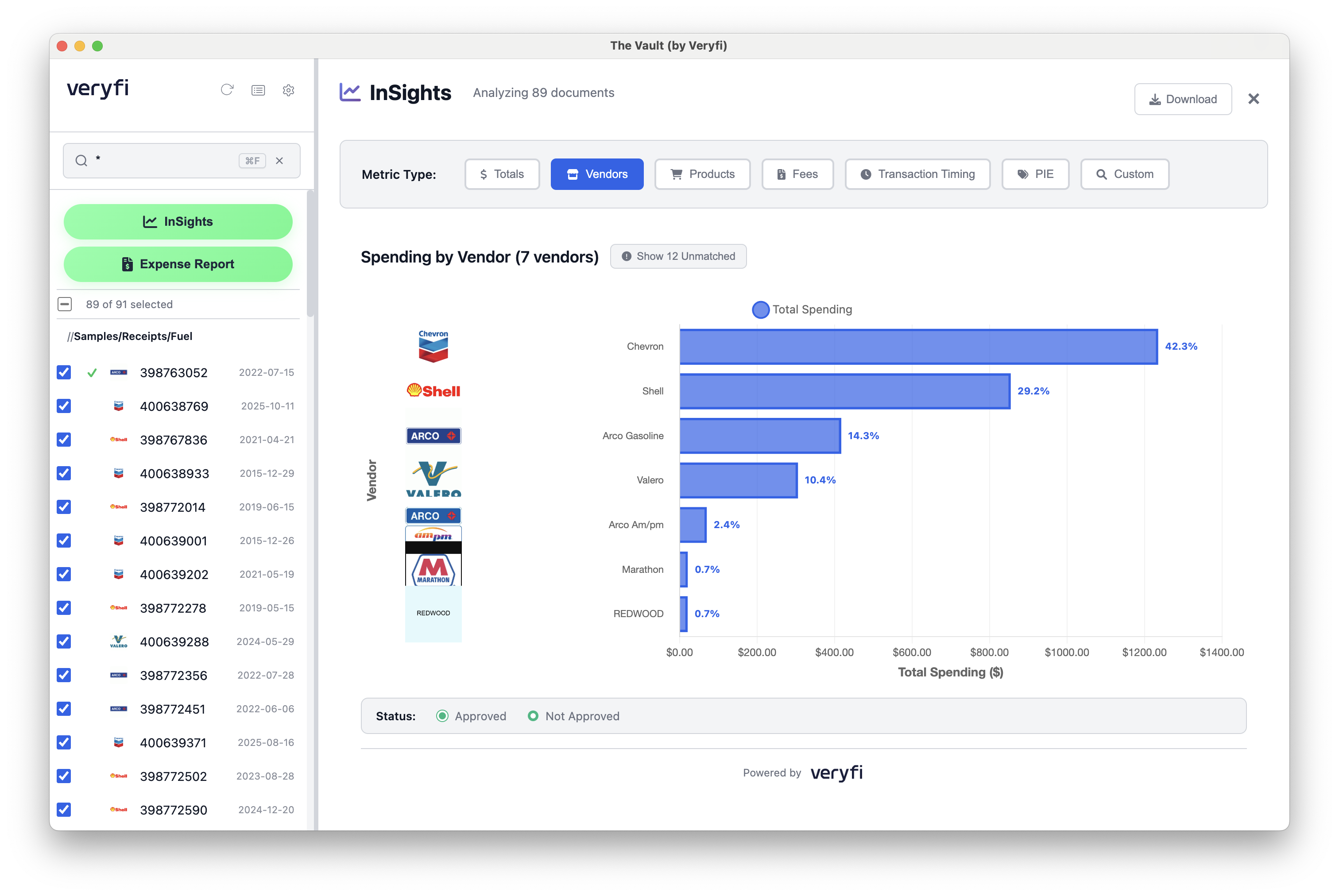
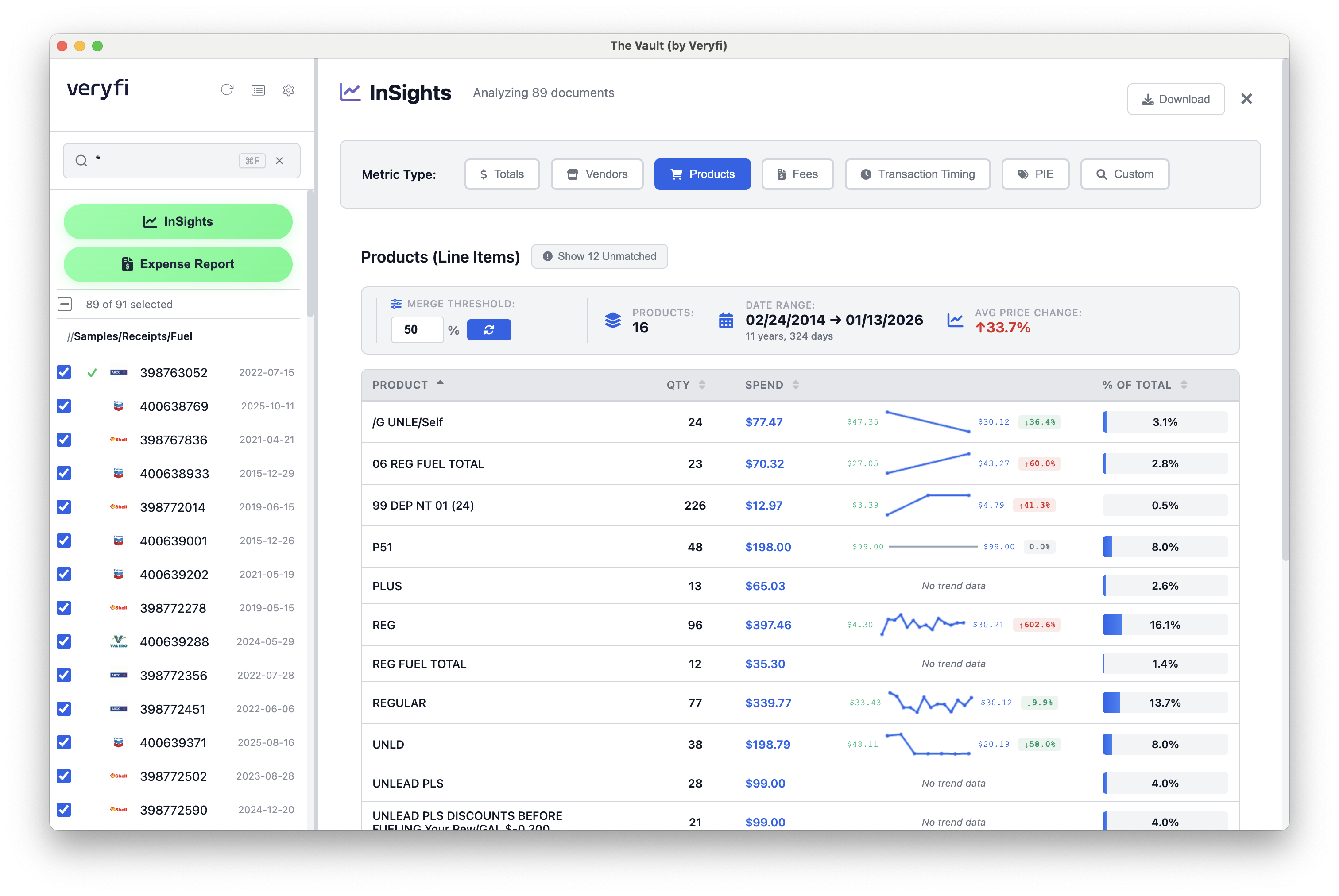
Slice it by vendor and you start to see which stations are consistently more expensive. Slice it by fuel product and new patterns emerge around premium vs. regular usage. The questions never stop once your data is in structured form — and that’s the whole point.
One More Thing
With California gas prices set to climb even further following Valero’s refinery closure, the pressure on consumers and businesses alike isn’t going away anytime soon. At least one guy in California has been keeping meticulous track of every dollar spent at the pump for the past decade.
If you want to do the same or build a product on the receipts api, reach out and I’ll set you up with The Vault to start tracking your own fuel spend. Your receipts have more to say than you think.
Technologies Used Here
- Lens a native mobile app used to capture fuel receipts.
- Receipts OCR API used to extract data from fuel receipts. If using Lens it’s already part of the workflow.
- The Vault is an internal app used to visualize the data from Veryfi’s APIs.
Have questions? Email [email protected] (the author)