




If you’ve ever received an invoice as a 47-line-item PDF attachment named “Invoice.pdf” and thought “there has to be a better way,” congratulations—you’re experiencing the same frustration merchants have felt for 5,000 years.
Invoices are arguably the most important document in business. They’re how companies get paid. Yet somehow, in five millennia, humanity has managed to make invoices progressively more complicated, more error-prone, and more annoying.
Let’s take a journey through the hilariously chaotic history of invoices, from ancient clay tablets to modern email attachment hell—and discover how artificial intelligence finally solved problems that have plagued merchants since 3000 BCE.
3000 BCE: The First Invoice (Literally Set in Stone)
The oldest known invoice is a Sumerian clay tablet from ancient Mesopotamia recording a delivery of barley. Merchants would inscribe transaction details into wet clay, bake it hard, and then… break it in half.
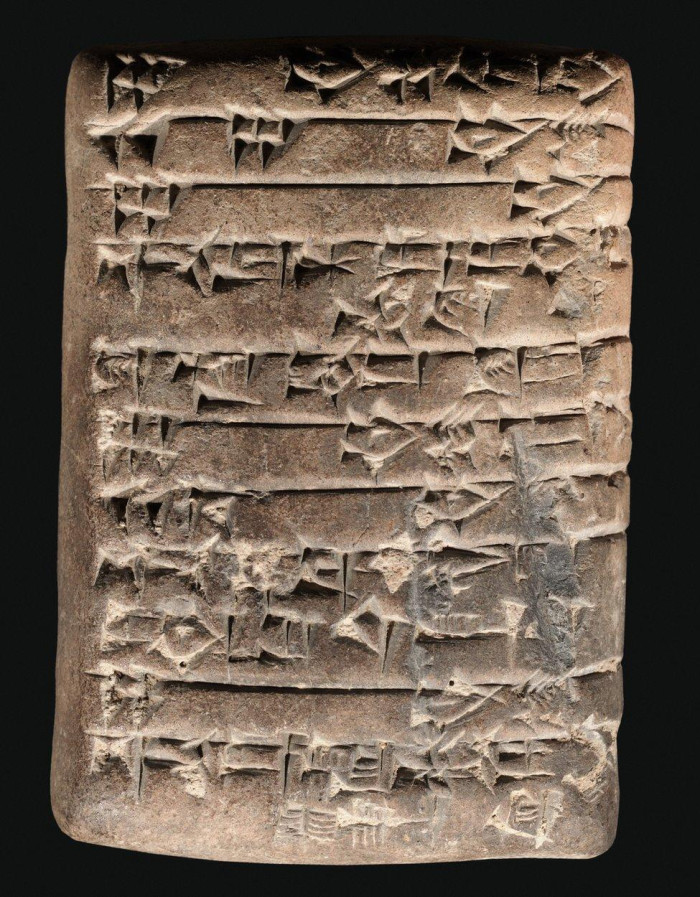
One half went to the buyer, one half stayed with the seller. If both halves matched, the transaction was verified. Ingenious!
The problems:
- Lose your half? No proof of payment.
- Tablet breaks into three pieces? Now you’ve got a dispute.
- Someone tries to forge a tablet? Better hope your half matches.
- Need to reference an old transaction? Hope you have good clay tablet filing system.
Ancient accountants had literal warehouses full of clay tablets. Imagine doing month-end reconciliation with 500 pounds of baked clay.
1773: The Invoice That Started a Revolution
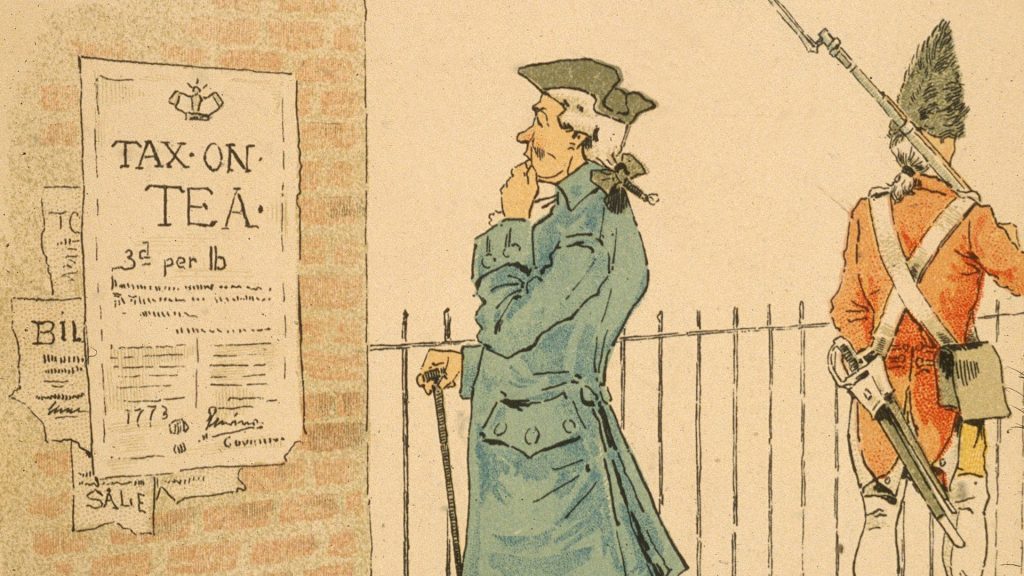
In 1773, the British East India Company sent invoices for tea shipments to American colonists. Simple enough, right?
Except Britain added a new line item: tea tax.
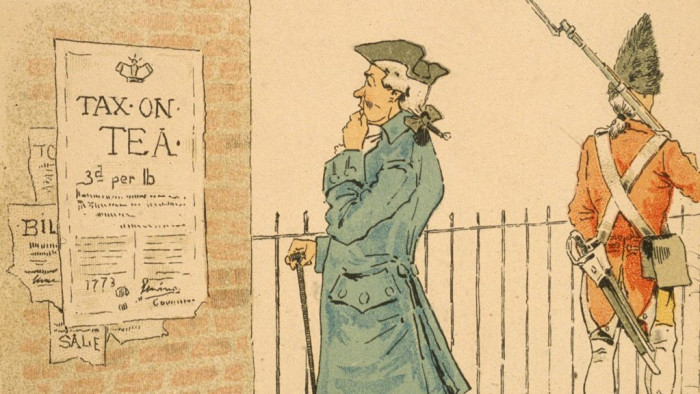
American colonists looked at these invoices and thought “This is taxation without representation!” Britain thought “Just pay the invoice.”
The dispute escalated. On December 16, 1773, colonists boarded ships in Boston Harbor and threw 342 chests of tea (worth about $1.7 million today) into the water.
The Boston Tea Party was essentially history’s most dramatic invoice dispute.
Britain’s response? More taxes, more invoices. America’s response? Revolution.
The lesson: Be very careful about surprise line items on your invoices.
1950s-1990s: The Carbon Copy Nightmare
Before computers, businesses created invoice copies using carbon paper—thin sheets of paper coated with carbon that transferred writing to pages beneath it.
Invoices typically came in triplicate (or more):
- White copy: Customer
- Yellow copy: Accounting
- Pink copy: Filing
- Goldenrod copy: Sales (if you were fancy)
The problems were legendary:
Press too hard? You’d tear through all the copies, creating confetti instead of invoices.
Don’t press hard enough? The bottom copies would be unreadable, leading to “I can’t read this invoice” disputes.
Make a mistake? You had two options:
- Cross out the error on ALL copies (looked unprofessional)
- Start completely over (waste of paper and time)
Side effects: Permanent carbon stains on your fingers, carbon smudges on your clothes, and the lingering smell of carbon paper in accounting departments.
The worst part? The bottom copy was always suspiciously faint. Customers would squint at barely-legible numbers and accountants would argue “It says $1,500!” “No, it says $1,300!” “No, it’s definitely $1,800!”
Everyone lost.
1990s-2000s: The Fax Machine Era
Fax machines were supposed to revolutionize invoice delivery. Finally, instant transmission of documents across phone lines! No more waiting for mail! The future is here!
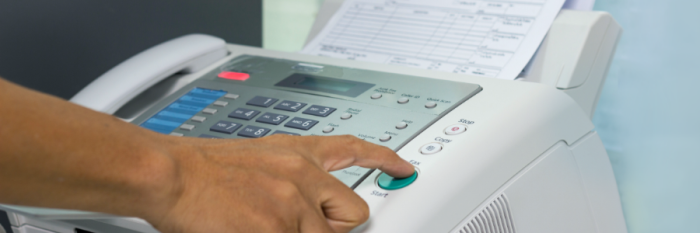
Except fax machines created new problems:
Thermal paper invoices that faded: Fax machines used thermal paper that would turn completely blank within months. Customers would file their faxed invoice, then six months later pull out a blank piece of paper for their records. “I swear there was an invoice here!”
The curl: Faxed invoices would immediately curl into tight tubes. Accountants had desks covered in curled paper tubes that would spring open if you weren’t careful, scattering invoices across the office like party streamers.
Transmission failures: “Fax failed to send” was the new “check is in the mail.” Did the invoice arrive? Who knows! The fax machine claimed it sent, but the recipient claims they never got it. Cue the blame game.
Paper jams at the worst time: A 50-page invoice with detailed line items would start printing… then jam on page 23. The fax machine would make horrible grinding noises, create an accordion of crumpled paper, and force someone to spend 20 minutes extracting shredded invoice confetti from the machine’s internal mechanisms.
The 1990s accountant’s battle cry: “DID YOU FAX THE INVOICE?!”
2000s-Present: Email Attachment Hell
“Email invoices will solve everything!” proclaimed the early internet optimists. “No more paper! No more fax! Just digital efficiency!”
Fast forward to 2025, and we’ve created entirely new chaos:
The Naming Convention Disaster
Every invoice is named “Invoice.pdf”
You download it. Now you have:
- Invoice.pdf
- Invoice (1).pdf
- Invoice (2).pdf
- Invoice (3).pdf
- Invoice_final.pdf
- Invoice_final_v2.pdf
- INVOICE_FINAL_ACTUALLY_FINAL.pdf
Good luck finding the right one three months from now.
The Spam Folder Black Hole
Invoices from new vendors automatically go to spam. The vendor sends an invoice, assumes you received it, and expects payment. You never saw it because Gmail decided “This looks like phishing.”
Day 30: Vendor sends “payment overdue” notice
You: “I never got an invoice”
Vendor: “I sent it on the 1st”
You: checks spam folder
You: “Oh.”
The Format Chaos
Invoices arrive as:
- PDFs (normal)
- Word documents (why?)
- Excel spreadsheets (sometimes with broken formulas)
- Scanned images (tilted at 15-degree angles)
- PowerPoint presentations (yes, really)
- Plain text emails with no attachment
- Links to “view invoice online” that expire after 30 days
- Zip files containing multiple files with unclear naming
The Email Chain Nightmare
Subject line: “Re: Re: Fw: Fw: Re: Invoice attached”
The original invoice is buried seven emails deep. Nobody knows which attachment is the real invoice. There are three different versions with slightly different totals. One person accidentally forwarded the wrong invoice. Chaos reigns.
The “Did You Receive My Invoice?” Dance
Day 1: Vendor sends invoice
Day 15: Vendor sends “Just checking you received my invoice”
Day 20: “Following up on my invoice”
Day 25: “Wanted to make sure my invoice didn’t get lost”
Day 30: “Payment is now overdue”
Day 35: “FINAL NOTICE”
Day 40: You pay
Day 41: Vendor sends thank you note (while internally screaming)
Repeat monthly.
The Eternal Optimism of “Net 30”
For centuries, vendors have written “Payment Due in 30 Days” on invoices. For centuries, customers have interpreted this as “suggestions.”
The actual payment timeline:
- Day 0: Invoice sent
- Day 1-29: Invoice ignored
- Day 30: Invoice officially overdue (still ignored)
- Day 45: First “friendly reminder” sent
- Day 60: Second reminder with slightly passive-aggressive tone
- Day 75: Third reminder mentioning “late fees” (that will never be collected)
- Day 90: Payment finally arrives
- Late fees paid: $0
- Vendor’s response: “Thank you for your business!” (while crying internally)
Medieval merchants dealt with the same problem. Account ledgers from 1400s Italy are filled with margin notes like “Still awaiting payment from Giovanni – 6 months overdue.”
Some things never change.
The Real Problem: Invoices Were Never Designed for Humans
Here’s the uncomfortable truth: modern invoices have become impossible to manage because they’re trying to serve too many purposes:
- Legal document (proof of transaction)
- Payment request (collect money)
- Accounting record (track revenue)
- Tax documentation (IRS compliance)
- Inventory tracking (what was sold)
- Customer communication (contact info, terms)
- Audit trail (transaction history)
- Dispute resolution (when something goes wrong)
What started as simple “you owe me X for Y” has morphed into complex multi-page documents with dozens of line items, tax calculations, payment terms, late fee schedules, legal disclaimers, and reference numbers.
Nobody wants to manually process invoices. But until recently, there was no alternative.
Enter AI: Turning 5,000 Years of Invoice Chaos Into Structured Data
This is where modern technology finally solves the invoice problem that’s plagued humanity since ancient Mesopotamia.
Veryfi’s Invoice OCR API uses artificial intelligence to instantly extract structured data from any invoice—whether it’s:
- A faded fax from 1998
- A crumpled PDF named “Invoice.pdf”
- A tilted scanned image at 15-degree angle
- An email attachment buried in a forwarded chain
- A photo of a paper invoice taken in poor lighting
- A 50-line-item invoice in 8-point font
The API automatically extracts and structures:
- Vendor name, address, and contact information
- Invoice number and date
- Due date and payment terms
- Line items with descriptions, quantities, and prices
- Subtotals, taxes, shipping, and total amounts
- Payment methods and account details
- Purchase order numbers and reference codes
The result? Businesses can finally do what they’ve needed since 3000 BCE: turn invoices into actionable data without manual entry, carbon paper, fax machines, or email archaeology.
Real-World Applications That Would Amaze Ancient Merchants
Modern businesses use invoice OCR AI for applications that Sumerian clay tablet makers couldn’t imagine:
- Accounts Payable Automation: Invoices arrive via email, the AI extracts all data automatically, matches it to purchase orders, routes for approval, and schedules payment—all without human data entry. What used to take 15 minutes per invoice now takes 15 seconds.
- Expense Management: Employees snap photos of invoices from business purchases. The AI extracts data, categorizes expenses, checks policy compliance, and populates expense reports automatically. No more manual entry, no more lost paper invoices.
- Accounts Receivable Tracking: Businesses automatically process outgoing invoices, track payment status, identify overdue accounts, and generate aging reports—all with zero manual data entry. “Net 30” violations are instantly visible.
- Multi-Currency & Multi-Language Support: The AI handles invoices in 100+ languages and automatically converts currencies. International business becomes dramatically simpler.
- Fraud Detection: AI can spot suspicious patterns: duplicate invoices, unusual amounts, mismatched vendor details, or invoices that don’t align with purchase orders—catching fraud before payment.
- ERP Integration: Invoice data flows directly into SAP, Oracle, QuickBooks, NetSuite, or any accounting system. No more manual entry, no more transcription errors, no more data entry bottlenecks.
- Audit Trails: Every invoice is digitally stored with extracted data, creating searchable archives. Need to find an invoice from 18 months ago? Search by vendor, amount, date, or any field—no more digging through filing cabinets or email folders.
From Clay Tablets to Cloud Intelligence
Ancient Sumerian merchants broke clay tablets in half to create transaction records. Medieval merchants maintained handwritten ledgers. 1950s accountants fought with carbon paper. 1990s offices battled fax machines. 2000s businesses drowned in email attachments.
Each era thought they’d solved the invoice problem. Each era was wrong.
Until now.
Those ancient Sumerian merchants would be amazed. (And probably relieved they don’t have to carry clay tablets anymore.)